

Stomach pain that won’t go away sends most people straight to Google, and the search results can be alarming. Burning pain, bloating, indigestion- these symptoms overlap so much between a stomach ulcer and stomach cancer that it’s genuinely hard to tell them apart without medical tests. That overlap is exactly why so many people either panic unnecessarily or, worse, dismiss something serious as “just an ulcer.”
Both conditions deserve attention. But they’re different diseases, with different causes, different urgency levels, and very different treatment paths.
What a Stomach Ulcer Actually Is?

A stomach ulcer, also called a gastric ulcer, is an open sore that forms in the stomach lining when stomach acid erodes the protective mucous layer. It’s a mechanical, chemical injury to the lining, not a growth of abnormal cells.
The two most common causes are:
- H. pylori infection – a bacterium that damages the stomach’s protective lining, making it far more vulnerable to acid
- Long-term use of painkillers like NSAIDs – regular use of ibuprofen, aspirin, or similar medications can wear down the same protective barrier over time
Ulcers typically cause a burning pain in the upper abdomen that often gets worse on an empty stomach and eases after eating or taking antacids. With the right treatment, usually antibiotics for H. pylori, along with acid-reducing medication, most ulcers heal within a couple of months.
What Stomach Cancer Actually Is?
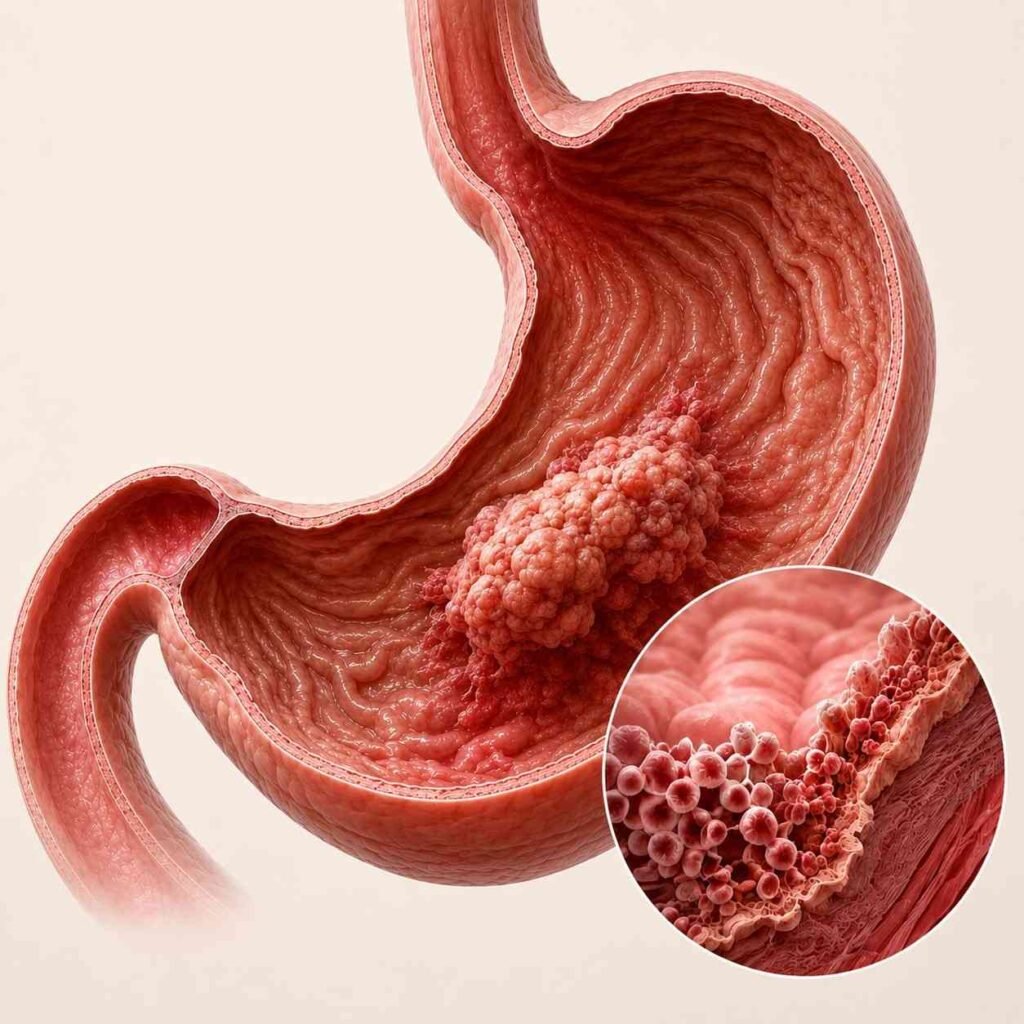
Stomach cancer, also known as gastric cancer, develops when cells in the stomach lining begin to grow and divide uncontrollably, forming a tumour. Unlike an ulcer, it isn’t a wound that heals with medication; it’s an abnormal growth that needs to be diagnosed and treated as cancer, often through surgery, chemotherapy, or a combination of treatments depending on the stage.
What makes stomach cancer particularly tricky is that early on, it often causes no symptoms at all, or symptoms mild enough to be brushed off as everyday digestion issues. By the time more specific warning signs appear, the disease may already be more advanced.
Where the Symptoms Overlap, and Where They Don't
Both conditions can cause abdominal discomfort, bloating, and nausea, which is exactly why self-diagnosis is unreliable. That said, a few patterns tend to differ:
- Ulcer pain is often described as burning or gnawing, tends to be relieved by eating or antacids, and is usually localized to one area.
- Cancer-related symptoms are more likely to include unintentional weight loss, persistent fatigue, feeling full after eating very little, difficulty swallowing, or blood in vomit or stool.
- Duration and pattern matter – an ulcer that keeps healing and returning with treatment behaves differently from symptoms that steadily worsen despite medication.
None of these differences are reliable enough to self-diagnose. They’re useful for knowing when to take symptoms seriously, not for ruling cancer in or out on your own.
The Connection Between the Two
Here’s the part that often gets glossed over: an ulcer and stomach cancer aren’t always unrelated. Chronic, long-standing H. pylori infection, the same bacterium behind most stomach ulcers, is also one of the strongest known risk factors for stomach cancer if left untreated over many years. This doesn’t mean an ulcer turns into cancer directly, but persistent inflammation of the stomach lining over time can lead to cellular changes that eventually raise cancer risk.
This is precisely why doctors don’t just treat ulcer symptoms and move on. If an ulcer doesn’t heal as expected, keeps recurring, or shows unusual features on endoscopy, biopsies are taken, not because cancer is assumed, but because ruling it out is the responsible next step. It’s also why treating H. pylori properly the first time matters far more than most patients realize; it isn’t just about resolving pain, it’s about reducing long-term risk.
How Doctors Tell the Difference
Since symptoms alone aren’t enough, an upper endoscopy is the standard way to properly evaluate stomach pain that isn’t resolving. During this procedure, a doctor can directly view the stomach lining and, if anything looks abnormal, take a biopsy for testing. This is the definitive way to distinguish a benign ulcer from a malignant growth; imaging or symptom review alone can’t do this reliably.
When to See a Specialist?
Stomach pain lasting more than a couple of weeks, especially alongside unexplained weight loss, persistent fatigue, or blood in stool or vomit, shouldn’t wait for a “let’s see if it goes away” approach. As a surgical oncology practice in Mumbai with experience across gastrointestinal and stomach cancers, we’ve seen how much earlier evaluation changes outcomes, both for straightforward ulcers and for cases that turn out to be something more serious.
If persistent stomach symptoms have you concerned, book a consultation with us at our Dadar or Matunga clinic. A proper evaluation, not guesswork, is the only way to know for sure what you’re dealing with.